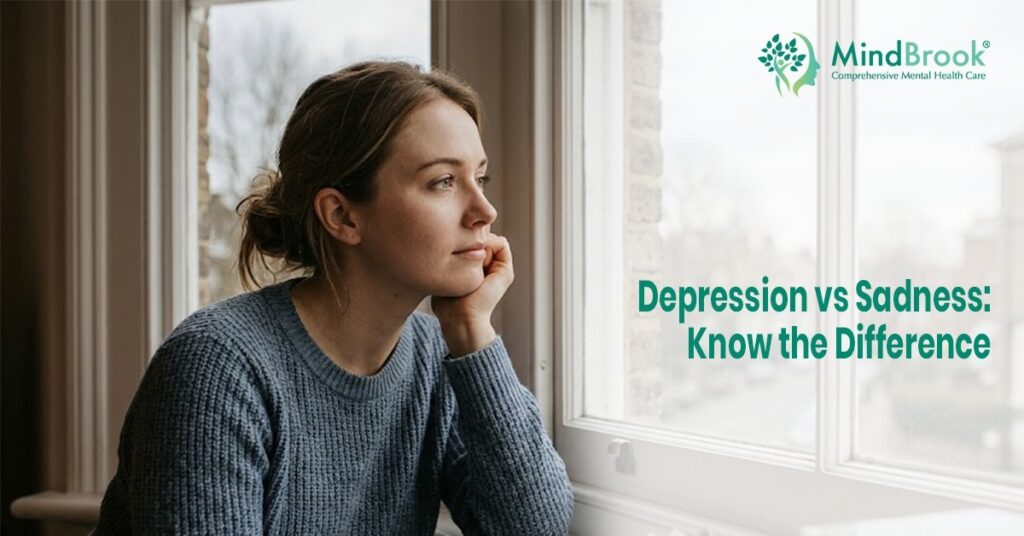
“I’m so depressed” – we’ve all heard someone say it, maybe after a bad day at work or a disappointing game. But here’s the truth: sadness and depression are not the same thing. Confusing the two can lead people to either dismiss what they’re feeling as “just emotions” or incorrectly self-diagnose a serious condition.
Understanding the difference matters. Not just clinically, but for your own mental well-being – and knowing when it’s time to reach out to a professional.
What Is Sadness?
Sadness is one of the core human emotions as natural and necessary as joy, fear, or anger. It’s a healthy emotional response to difficult situations: losing a job, going through a breakup, grieving a loved one, or facing disappointment.
Key characteristics of normal sadness include:
• It has a clear cause or trigger
• It comes and goes you can still experience moments of joy or relief
• It tends to improve on its own with time, support, or distraction
• It doesn’t significantly prevent you from carrying out daily responsibilities
• Crying or talking about it usually brings some sense of relief
Even intense sadness such as grief after losing someone close is a normal part of life. It can feel overwhelming, but it isn’t the same as clinical depression.
What Is Clinical Depression?
Clinical depression also known as Major Depressive Disorder (MDD) is a medical condition that goes far beyond feeling sad. It affects how you feel, think, and function daily.
To be diagnosed, the DSM-5 requires at least five symptoms lasting two weeks or more including either persistent low mood or loss of interest in things you once enjoyed.
Symptom | What It Looks Like |
Depressed mood | Feeling empty, hopeless, or tearful most of the day |
Loss of interest (anhedonia) | No longer enjoying hobbies, socializing, or activities you once loved |
Sleep changes | Sleeping too much, or unable to sleep — nearly every day |
Energy loss / fatigue | Feeling exhausted even without physical exertion |
Appetite or weight changes | Significant gain or loss unrelated to dieting |
Difficulty concentrating | Trouble thinking, remembering, or making decisions |
Feelings of worthlessness | Excessive guilt or self-criticism that feels irrational |
Psychomotor changes | Moving or speaking noticeably slower — or feeling restless/agitated |
Thoughts of death or suicide | Recurrent thoughts about dying, or suicidal ideation |
At least one of the first two symptoms (depressed mood or loss of interest) must be present. These symptoms must also cause significant distress or impair your functioning at work, in relationships, or in daily life.
Depression vs. Sadness: 5 Key Differences
1. Duration
Sadness typically lifts within hours or days. Clinical depression, by definition, lasts at least two weeks and for many people, much longer without treatment.
2. Presence of a trigger
Sadness usually follows a specific event. Depression can emerge without an obvious cause, or it may persist long after the original trigger has passed and circumstances have improved.
3. Impact on daily functioning
When you’re sad, you can usually still get through the day – go to work, talk to friends, take care of yourself. Depression makes even basic tasks feel exhausting or impossible. Simple decisions can feel overwhelming.
4. Physical symptoms
Depression often manifests physically: changes in sleep, appetite, and energy levels are common hallmarks. Sadness rarely causes these kinds of sustained physical changes.
5. Ability to feel positive emotions
Someone experiencing sadness can still feel happy, laugh at a joke, or enjoy a good meal. A defining feature of depression — especially anhedonia — is the inability to experience pleasure, even in things that once brought joy.
Important: Not everyone with depression feels “sad.” Some people describe feeling numb, empty, or simply disconnected from life. Others may experience irritability or physical aches rather than low mood. Depression wears many faces. |
Are There Different Types of Depression?
Yes — depression isn’t one-size-fits-all. Some forms you should know about include:
• Major Depressive Disorder (MDD): The most common form, with persistent symptoms for two weeks or more.
• Persistent Depressive Disorder (Dysthymia): A milder but longer-lasting form — low mood for two or more years.
• Seasonal Affective Disorder (SAD): Depression that follows a seasonal pattern, often worsening in fall/winter.
• Postpartum / Peripartum Depression: Depression that occurs during pregnancy or after childbirth. Symptoms can sometimes become noticeable months after birth.
• Premenstrual Dysphoric Disorder (PMDD): Severe mood symptoms tied to the menstrual cycle.
Dr. Shrestha at MindBrook Psychiatry specializes in diagnosing and treating all of these forms — including through telehealth for patients across Florida.

When Should You Seek Professional Help?
It can be difficult to know when to reach out. Here are clear signals that it’s time to speak with a mental health professional:
• Your low mood has lasted more than two weeks
• You’ve lost interest in activities or people you used to care about
• You’re struggling to get through work, school, or relationships
• You’re sleeping too much or too little most nights
• You’re having thoughts of self-harm or suicide
• You feel hopeless or like things will never improve
• Nothing – not time, rest, or support from others – seems to help
If any of these resonate, please don’t wait. Depression is a medical condition, not a personal weakness and it responds very well to treatment.
How Is Depression Treated?
The good news: depression is one of the most treatable mental health conditions. Treatment options include:
• Medication management: Antidepressants (such as SSRIs or SNRIs) can rebalance brain chemistry and significantly reduce symptoms.
• Psychotherapy: Talk therapies like Cognitive Behavioral Therapy (CBT) help identify and shift negative thought patterns.
• GeneSight testing: This genetic test, offered at MindBrook Psychiatry, helps match patients to the medications most likely to work based on their DNA – reducing the trial-and-error often associated with antidepressants.
• Telehealth psychiatry: Accessible, private care from home – ideal for patients across Florida and New Jersey.
Most people see significant improvement with the right combination of medication and therapy. The key is getting an accurate diagnosis and personalized treatment plan.

Get Support at MindBrook Psychiatry in Tampa, FL
If you’ve been wondering whether what you’re feeling is “just sadness” or something more, the most important step is simply talking to someone qualified to help. You don’t have to figure it out alone.
Dr. Manita Shrestha at MindBrook Psychiatry offers compassionate, evidence-based psychiatric care in Tampa, FL – with both in-person and telehealth options available across Florida and New Jersey. She specializes in depression, anxiety, PTSD, ADHD, and more.
Learn more about MindBrook’s depression treatment in Tampa, including psychiatric evaluation, medication management, and follow-up care.
ADHD Therapist & Psychiatrist in Tampa, FL | MindBrook
MindBrook's licensed ADHD psychiatrist in Tampa, FL offers expert evaluation, diagnosis & medication management. In-person & telehealth. New patients welcome.
About ADHDPTSD Treatment Florida | Mindbrook Telehealth Care
Struggling with PTSD in Florida? Mindbrook's board-certified psychiatrists deliver proven telehealth treatment in Tampa. Book your free consultation today.
About PTSDReady to take the next step?
Book an appointment at MindBrook Psychiatry today. In-person in Tampa or via secure telehealth across Florida and New Jersey. Call 813-680-2207 or visit mind-brook.com to get started.
Book an appointmentMedical Disclaimer: This article is for informational purposes only and does not constitute medical advice, diagnosis, or treatment. Always consult a qualified mental health professional for guidance specific to your situation. If you are experiencing a mental health crisis, call 988 or go to your nearest emergency room.
By Dr. Manita Shrestha, DNP, PMHNP-BC | MindBrook Psychiatry, Tampa, FL | June 2026