What Is PTSD?
Post-traumatic stress disorder (PTSD) is a mental health condition that can develop after experiencing or witnessing a traumatic or life-threatening event. Trauma affects the brain and nervous system, sometimes leaving the body stuck in a prolonged stress response long after the danger has passed.
PTSD may develop after:
- Military combat or deployment
- Sexual assault or abuse
- Domestic violence
- Serious accidents or injuries
- Sudden loss of a loved one
- Natural disasters or hurricanes
- Childhood trauma or neglect
- Occupational trauma experienced by healthcare workers or first responders
PTSD is not a personal weakness or character flaw. It is a recognized medical condition that can affect anyone.
According to the National Institute of Mental Health (NIMH), about 6 out of every 100 people will experience PTSD at some point in their lives.
PTSD Symptoms
PTSD symptoms generally fall into four categories recognized by the DSM-5.
1. Intrusive Memories and Re-Experiencing
People with PTSD may repeatedly relive traumatic experiences through:
Flashbacks
Disturbing memories
Trauma-related nightmares
Intense emotional distress when reminded of the event
Physical reactions such as sweating, shaking, or rapid heartbeat
2. Avoidance
Avoidance symptoms may include:
Staying away from people, places, or situations connected to the trauma
Avoiding conversations or thoughts about the event
Emotional numbness or detachment
3. Negative Changes in Mood and Thinking
PTSD can affect self-perception, relationships, and emotional health. Symptoms may include:
Persistent fear, guilt, shame, or anger
Feeling disconnected from others
Loss of interest in activities once enjoyed
Difficulty experiencing positive emotions
Negative thoughts about oneself or the world
4. Hyperarousal and Reactivity
Many people with PTSD feel constantly on edge. Symptoms may include:
Hypervigilance
Being easily startled
Sleep difficulties
Trouble concentrating
Irritability or angry outbursts
Anxiety or panic symptoms
PTSD Symptoms Checklist
You may benefit from a professional PTSD evaluation if you have experienced several of the following symptoms for more than one month:
✔ Flashbacks or nightmares related to trauma
✔ Avoidance of reminders connected to the event
✔ Emotional numbness or feeling detached from loved ones
✔ Constant anxiety or feeling “on guard”
✔ Difficulty sleeping or concentrating
✔ Persistent negative thoughts or self-blame
✔ Loss of interest in normal activities
✔ Irritability, anger, or emotional outbursts
A proper diagnosis should always be made by a licensed mental health professional.
MindBrook Psychiatry offers PTSD evaluations in Tampa as well as secure telehealth appointments throughout Florida.
What Is Complex PTSD (C-PTSD)?
Complex PTSD (C-PTSD) can develop after prolonged or repeated trauma, particularly situations where a person feels trapped, powerless, or unsafe over a long period of time.
Examples may include:
Childhood abuse or neglect
Domestic violence
Human trafficking or captivity
Long-term emotional abuse
Repeated interpersonal trauma
Complex PTSD includes many symptoms of standard PTSD, but may also involve:
Difficulty regulating emotions
Chronic shame or low self-worth
Dissociation or feeling disconnected from reality
Difficulty trusting others
Relationship and attachment challenges
Persistent feelings of emptiness or hopelessness
Although Complex PTSD is recognized in the ICD-11, it is not currently a separate diagnosis in the DSM-5. However, many trauma professionals recognize these symptom patterns and use trauma-informed treatment approaches to address them.
How PTSD Affects the Brain
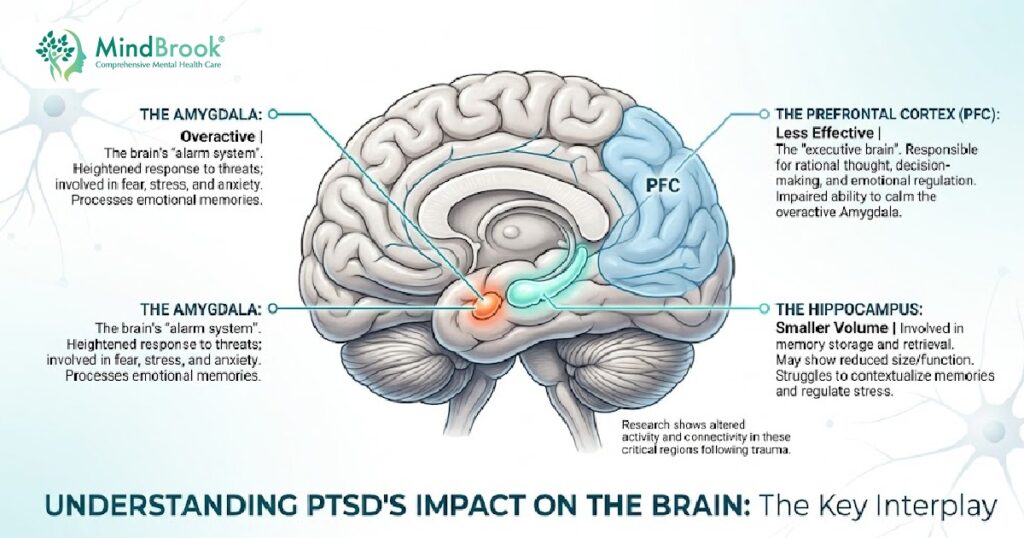
Trauma can significantly affect how the brain processes stress and danger.
Research suggests that PTSD may involve:
Increased activity in the amygdala (the brain’s fear center)
Changes in the hippocampus, which helps process memory
Reduced regulation from the prefrontal cortex, which helps manage emotional responses
These neurological changes can contribute to symptoms such as hypervigilance, flashbacks, anxiety, emotional dysregulation, and sleep disturbances.
The important thing to remember is that PTSD symptoms are treatable, and many people experience meaningful improvement with appropriate care.
PTSD Treatment Options in Tampa, FL
At MindBrook Psychiatry, PTSD treatment plans are personalized based on your symptoms, trauma history, goals, and any co-occurring mental health conditions.
Treatment options may include:
Psychiatric Evaluation
A comprehensive mental health assessment helps identify PTSD symptoms, related conditions, and the most appropriate treatment approach.
Medication Management
Some patients benefit from medications that help reduce:
Anxiety
Panic symptoms
Depression
Sleep disturbances
Trauma-related mood symptoms
Medication plans are individualized and carefully monitored.
GeneSight Testing
GeneSight testing may help guide medication decisions by identifying how your body may metabolize certain psychiatric medications. This testing can sometimes be useful for patients who have struggled with medication side effects or ineffective treatment responses.
Telehealth PTSD Treatment
MindBrook Psychiatry provides secure virtual appointments throughout Florida, allowing patients to receive care from the comfort of home.

PTSD Risk Factors in Tampa, FL
PTSD can affect anyone, but certain groups may face higher risk.
Veterans and Military Personnel
Veterans near MacDill Air Force Base may experience combat trauma, military sexual trauma (MST), or deployment-related stress. MindBrook Psychiatry accepts TRICARE.
First Responders
Police officers, firefighters, paramedics, and healthcare workers are frequently exposed to traumatic events and high-stress environments.
Women
Women are statistically more likely to develop PTSD, especially after experiences involving interpersonal violence, abuse, or traumatic childbirth.
LGBTQ+ Individuals
Minority stress, discrimination, violence, and family rejection can increase trauma-related mental health challenges.
Survivors of Hurricanes and Natural Disasters
Residents of Tampa may experience trauma related to hurricanes, flooding, and severe weather events.
Why Choose MindBrook Psychiatry?
Meet Dr. Manita Shrestha
Dr. Manita Shrestha is a dual-certified psychiatric and primary care nurse practitioner with more than 15 years of clinical experience.
She earned her Master’s degree from NYU and her Doctorate from Rutgers University. Her approach combines evidence-based psychiatric care with compassionate, patient-centered support.

MindBrook Psychiatry provides:
- In-person PTSD treatment in Tampa
- Telehealth across Florida
- Same-day appointments when available
- Insurance-friendly care
- LGBTQ+-affirming support
- Trauma-informed psychiatric treatment
Frequently Asked Questions About PTSD Treatment
Yes. Many people experience significant improvement with evidence-based PTSD treatment, including therapy, medication management, and trauma-informed psychiatric care.
Treatment timelines vary from person to person. Some individuals improve within a few months, while others — especially those with complex trauma — may benefit from longer-term support.
Yes. MindBrook Psychiatry accepts:
- Aetna
- Cigna
- United Healthcare
- UMR
- Oscar
- Medicare
- TRICARE
Self-pay options are also available.
Yes. Secure telehealth appointments are available statewide throughout Florida.
PTSD is often associated with a single traumatic event, while Complex PTSD is linked to prolonged or repeated trauma and may involve additional difficulties with emotional regulation, relationships, and self-perception.
Call 813-680-2207 or book online at mind-brook.com/book-an-appointment. Office hours: Mon–Thu 9 AM–6 PM, Fri 9 AM–5 PM, Sat 10 AM–1 PM. Same-day appointments are available in person and via telehealth, subject to availability.
You can call MindBrook Psychiatry directly at 813-680-2207 or schedule online through the website.
Begin Your PTSD Healing Journey Today
Trauma can change how you experience the world — but it does not define who you are.
At MindBrook Psychiatry, we provide compassionate, evidence-based PTSD treatment designed to help you regain stability, confidence, and emotional well-being.
Whether you are seeking support for recent trauma or long-standing PTSD symptoms, you do not have to navigate it alone.
Book PTSD Treatment in Tampa, FL
MindBrook Psychiatry
14505 Bruce B Downs Blvd
Tampa, FL 33613
Phone: 813-680-2207
Email: info@mind-brook.com
Office Hours:
- Monday–Thursday: 9 AM–6 PM
- Friday: 9 AM–5 PM
- Saturday: 10 AM–1 PM
Telehealth available statewide across Florida.
Insurance Accepted: Aetna · Cigna · United Healthcare · UMR · Oscar · Medicare · TRICARE
Self-Pay:
- $250 Initial Evaluation
- $150 Follow-Up
- No referral required
Online booking available at MindBrook Psychiatry.
Looking to find a psychiatrist in Tampa, FL? MindBrook offers in-person & telehealth care. Board-certified, insurance accepted. New patients are welcome.
Looking for trusted home care services in Sydney? GK Home Care offers NDIS-registered nursing & personal care. Call (02) 9064 4044 for a free consultation.
✍ Reviewed By Dr. Manita Shrestha,DNP, PMHNP-BC, AGPCNP-BC Board-Certified Psychiatric & Primary Care Nurse Practitioner | 15+ Years of Clinical Experience Dr. Shrestha is a dual-certified PMHNP-BC and AGPCNP-BC with over 15 years of experience in psychiatric and primary care. She founded MindBrook Psychiatry to provide compassionate, evidence-based mental health care to the Tampa Bay Area and New Jersey communities. She specializes in ADHD, anxiety, depression, PTSD, OCD, bipolar disorder, and medication management — including GeneSight genetic testing for precision psychiatry. MindBrook Psychiatry — 14505 Bruce B Downs Blvd, Tampa, FL | Published: May 2026 | Last Reviewed: May 2026 |